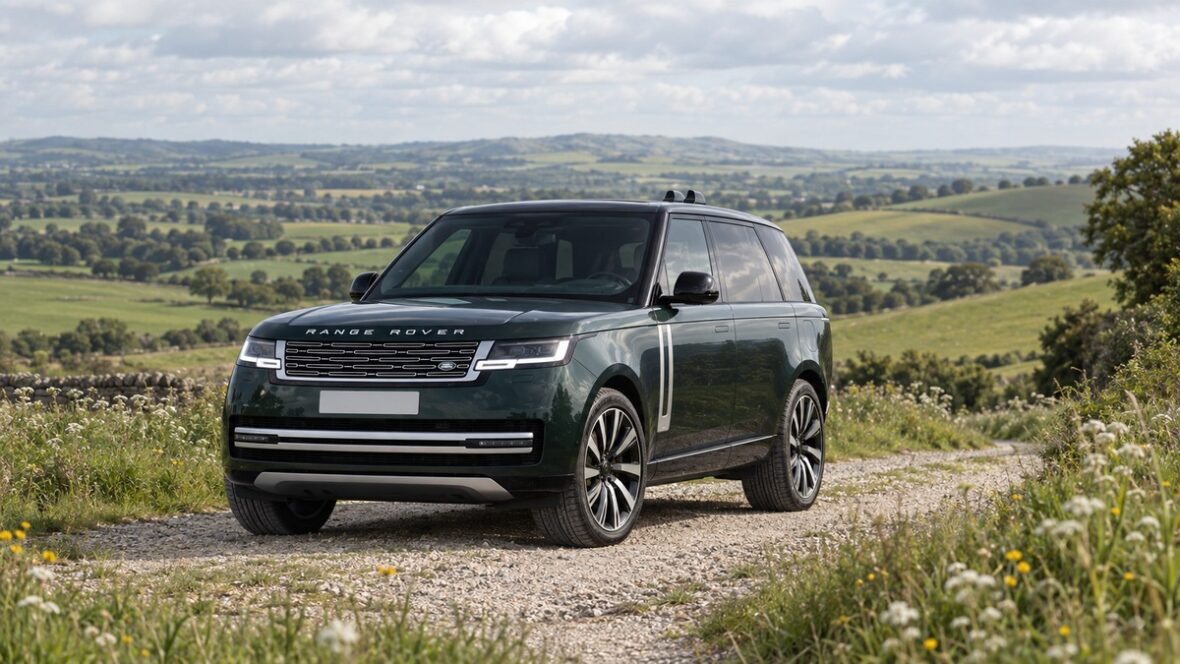
Land Rover’s most famous luxury SUV is adding a fully electric version for 2027, and the surprising part is how little about it changes. Same commanding shape, same quiet cabin, same willingness to leave the pavement behind. The gas engine simply steps aside for a big battery and a pair of electric motors.
- Two motors make 542 horsepower and 627 pound-feet, with a claimed 4.3-second sprint to 60 mph.
- A 119-kWh battery on an 800-volt system delivers an EPA-estimated 333 miles of range.
- Pricing starts at $140,550, a modest step up from the plug-in hybrid.
The Look Barely Budges
If you parked the electric version next to a gas Range Rover, you’d have to squint. Land Rover kept the styling almost line for line, tweaking only the grille, the wheels, and the underbody panels to help air slip past more cleanly. The big battery hides flat under the floor, so the interior stays roomy and looks pretty much identical to what buyers already know. Among luxury SUVs, that familiar interior gives the electric model a clear connection to the rest of the Range Rover family.
Two electric motors handle full-time all-wheel drive, and they add up to 542 horsepower and a hefty 627 pound-feet of torque. Land Rover figures that’s good for a 4.3-second run from a standstill to 60 mph, which is quick for something this large and this plush.
Still Happy in the Dirt
Going electric didn’t cost the Range Rover its backcountry credentials. It rides on air springs with adjustable height, and Land Rover lists a wading depth of up to 35 inches, matching the gas model. Land Rover has also built an electric traction-management system that, by its own account, reacts to wheel slip in as little as 50 milliseconds under the right conditions. The company says that’s roughly 100 times faster than the response you’d get from a combustion setup, which should help on slick or loose ground.
There’s another trail-friendly perk that EV owners already appreciate on the road. Single-pedal driving, where lifting off the accelerator slows the vehicle, turns out to be handy when you’re easing down a rocky grade. It gives you finer control over your speed without constant brake taps.
Range, Charging, and the App
The numbers here look competitive. That 119-kWh pack earns an EPA-estimated 333 miles on a full charge. It’s built around an 800-volt architecture, so it can gulp power quickly at a DC fast-charger, topping out at 350 kW. Land Rover claims a 10-to-80 percent fill takes about 22 minutes, and it says 10 minutes on the plug can add roughly 125 miles. A NACS charging port is standard, which lines it up with the charging hardware more and more shoppers expect.
Owners get a smartphone app too. You can reach the vehicle remotely to warm or cool the cabin, switch on the onboard air purifier, and glance at how much range is left before you head out the door.
What It Costs
Luxury like this carries a price. The announced starting price for the electric model is $140,550. That’s a real jump over the base gas Range Rover at $115,750, but it’s only about $9,200 more than the plug-in hybrid P550e, which lists for $131,350. Framed against the hybrid, the all-electric premium looks fairly reasonable.
A First Edition kicks off the lineup, offered in Belgravia Green, Santorini Black, or Varesine Blue. Inside, it wears a Light Cloud theme with Ultrafabric upholstery, a synthetic material Land Rover uses in place of hide. Buyers who want something more personal can work through the Bespoke customization program.
Why This One Matters
The appeal is simple. Land Rover managed to swap the powertrain without watering down what makes a Range Rover a Range Rover. It still climbs, wades, and coddles its passengers, with battery power taking the place of gasoline. For longtime fans considering an electric SUV, the familiar design offers continuity. The range estimate and charging claims still need to be weighed against driving conditions and the practicalities of charging an electric vehicle along a planned route.
The accompanying 2025 prototype walkaround shows an earlier stage of the electric SUV’s development, rather than its final production specification.