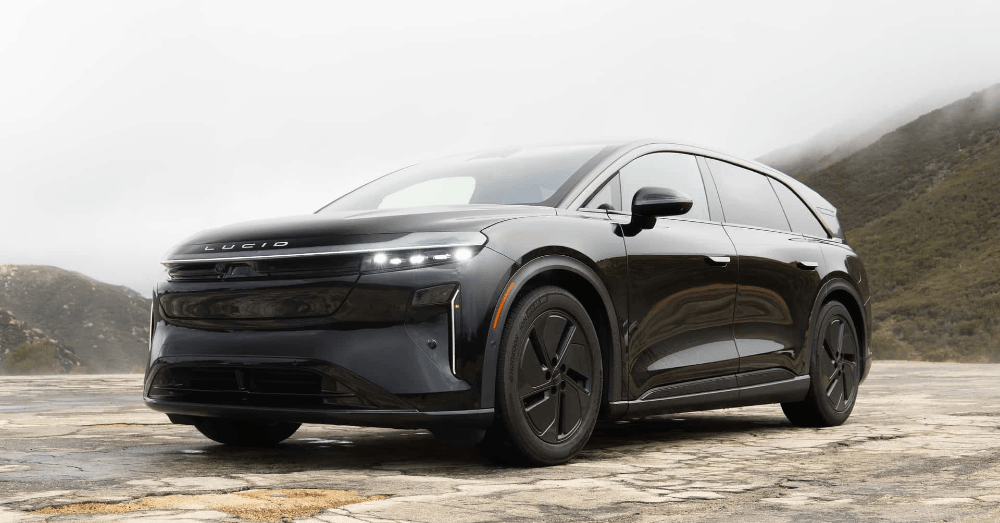
Lucid’s luxury electric SUV is back in the headlines for the wrong reason. The 2026 Lucid Gravity recall covers thousands of vehicles after federal safety regulators confirmed that second-row seatbelt anchors may not hold up in a crash, and the blame points squarely at a supplier that changed the weld design without telling Lucid.
- 4,476 SUVs affected: Lucid USA is recalling 4,476 Gravity electric crossovers from the 2025-2026 model years, registered with NHTSA under recall number 26V192.
- Root cause: Seat supplier Camaco made a manufacturing change without approval, resulting in improperly positioned and insufficient welds on the second-row seatbelt anchor brackets.
- The fix: Repairs may include reinforcing brackets with adhesive or, in more severe cases, full seat replacements at no cost to customers.
What Went Wrong With the Welds
According to the NHTSA recall report, the bracket holding the outboard lap belt anchor on the second-row seat may not have a sufficient weld, making affected vehicles noncompliant with Federal Motor Vehicle Safety Standard 207 (Seating Systems) and FMVSS 210 (Seat Belt Assembly Anchorages). In plain terms, the weld holding the lap belt anchor in place is either too short or in the wrong spot.
Why does that matter? FMVSS 210 states that the pelvic section of a three-point seatbelt must be loaded with 3,000 pounds for at least 10 seconds. During testing, the lap belt anchor bracket failed to hold under load for the required time. If a crash happened, the anchor could rip free, leaving a rear passenger without proper restraint.
How Lucid Found the Problem
The company told the National Highway Traffic Safety Administration that, during unrelated safety testing in January, it discovered some of the anchors for the SUV’s second-row seat belts were not properly welded. It was pure luck, basically. Engineers were checking something else on the rear seats when they caught the defect.
Less than a week after Lucid discovered this, it issued a stop-sale order, and from February 14, vehicles were produced with seat welds matching Lucid’s original specification. All Lucid Gravity vehicles from the 2025-2026 model years produced between December 2024 and February 2026 are affected.
A Supplier Went Rogue
The unusual twist here is that Lucid didn’t actually create this mess. Lucid determined the outboard lap belt anchor bracket weld was shorter than specified and not in the correct location due to a change in the manufacturing process made by the seat manufacturer, Camaco, without notice to or approval by Lucid. The automaker gave Camaco the correct specs and the supplier changed them anyway.
The supplier has reverted to Lucid Motors’ original design specification, and only Gravity SUVs made before February 14, 2026 are affected. Still, it’s a rough look for a young EV brand trying to build trust in a crowded premium segment.
What Owners Can Expect
To fix the issue, Lucid will inspect all potentially affected Gravity SUVs for seat welds that don’t conform to the manufacturer’s specification. For seats that can be repaired, service technicians will reinforce the lap belt anchor with a bracket and adhesive. Seats that cannot be repaired will be swapped out for a new seat with proper anchor welds.
There’s a waiting period, though. Lucid plans to issue interim notices to owners on May 22, with a planned remedy notification date not yet announced. If you own a Gravity built during the affected window, keep an eye on your mailbox and consider having rear passengers use the third row or front seats until the repair is complete.
The Bigger Picture for Lucid
This is the second recall in four months for the Gravity. The first one appeared in December 2025 and was caused by a labeling mistake. That was essentially a paperwork error. This one involves actual hardware that could fail in a crash, so it’s a different category of problem entirely.
The Gravity is Lucid’s second production model after the Air electric sedan, and deliveries of the seven-seat SUV started in late April last year, when it quickly became the fastest-charging EV in the United States. The SUV has earned praise for its range and charging speed, so a recall tied to basic seatbelt hardware stings more than usual. Still, catching the defect through its own internal testing, rather than after a crash, shows the quality process worked the way it’s supposed to.
What This Means if You Drive a Gravity
If your Gravity was built before February 14, 2026, expect a letter from Lucid in May with next steps. The repair itself is free, ranging from a bracket reinforcement to a full seat swap depending on what inspectors find. Until then, drive carefully and avoid putting kids or heavier passengers in the second-row outboard seats if you can help it. For a brand still building its reputation, how quickly and cleanly Lucid handles these service appointments will matter almost as much as the fix itself.