
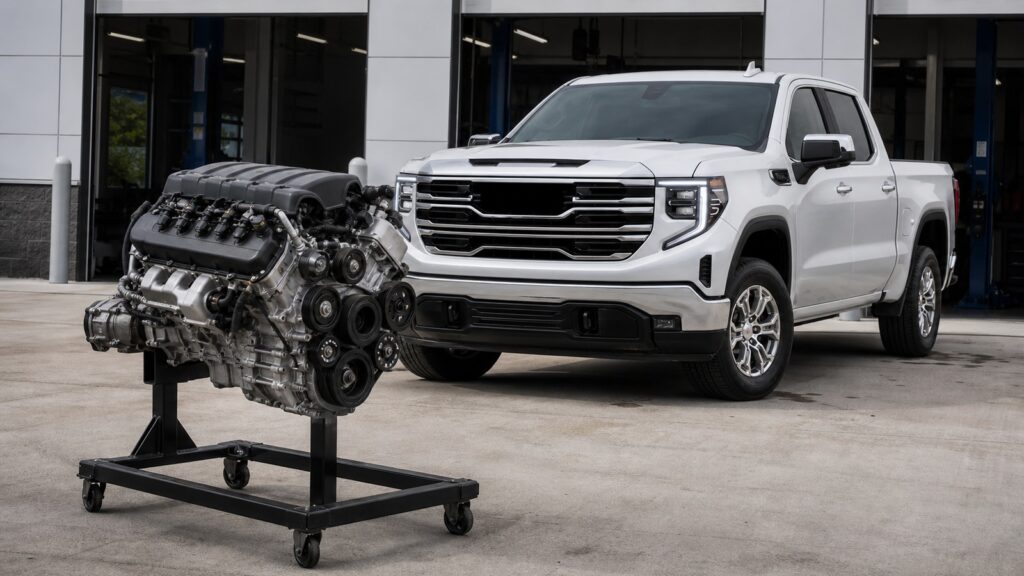
The federal safety review of a widely used General Motors V8 has moved to a more serious phase, raising fresh questions about whether an earlier recall actually solved the underlying failures.
- The NHTSA has upgraded its review of the L87 6.2-liter V8 to an engineering analysis.
- The probe covers 2021-2026 trucks and SUVs and follows a 2025 recall of nearly 600,000 vehicles.
- An engineering analysis does not automatically force a new recall.
A Review Moves to a Higher Level
The National Highway Traffic Safety Administration has raised its examination of General Motors’ L87 6.2-liter V8 to an engineering analysis, a step above the earlier recall query. The engine appears in a range of full-size trucks and SUVs, and the agency has spent years reviewing reports of engine failures tied to it. The current phase looks specifically at whether the fix applied through a 2025 recall did what it was meant to do.
That recall, issued in April 2025, covered close to 600,000 vehicles. GM addressed the reported failures by moving to a thicker viscosity oil and, in some cases, replacing engines outright. The engineering analysis now examines the effectiveness of those remedies rather than starting from a blank slate. Earlier steps stretch back several years, with three separate investigations opened between 2022 and 2024 before a targeted recall reached 2021 through 2024 models.
Which Vehicles and Complaints Are in Scope
The review centers on 2021 through 2026 models fitted with the 6.2-liter V8 gas engine. Named vehicles include the Chevrolet Silverado and GMC Sierra 1500, along with the Chevrolet Tahoe and Suburban, the GMC Yukon, and the Cadillac Escalade. The agency’s Office of Defects Investigation reported 499 customer complaints describing an engine failure that occurred after the earlier remedy was applied.
The scale of feedback extends further. GM reported close to 7,000 similar complaints involving failures after the recall remedy. Those reports form part of the record now being examined in the engineering analysis. Recall 25V-274 identifies the 2025 recall itself; the recall query was a separate investigation that regulators later upgraded.
Injuries, Litigation, and Possible Next Steps
The document upgrading the investigation cites one crash and one injury. When GM called the voluntary recall in 2025, it identified 12 crashes and 12 minor injuries, and 42 fire allegations were linked to the problem at that time. The company also faces continuing litigation over broad allegations of sudden engine failures, and it stated on Friday that it continues to cooperate with the investigation. Whether the latest findings affect the class-action matter remains unclear.
An engineering analysis does not automatically compel another recall. If regulators conclude that a safety defect exists, the agency can formally request one. These reviews can also close without action, and GM could choose to open another voluntary recall on its own. Given the number of complaints that the automaker acknowledges, a formal recall request is a plausible result, though nothing is settled at this stage.
What Shoppers Should Check
Someone comparing GMC 2500 trim levels should treat configuration research and safety research as two different steps. A trim guide can help narrow features, while NHTSA’s VIN lookup and manufacturer notices are the better sources for determining whether a specific vehicle is covered by a recall or investigation.
