
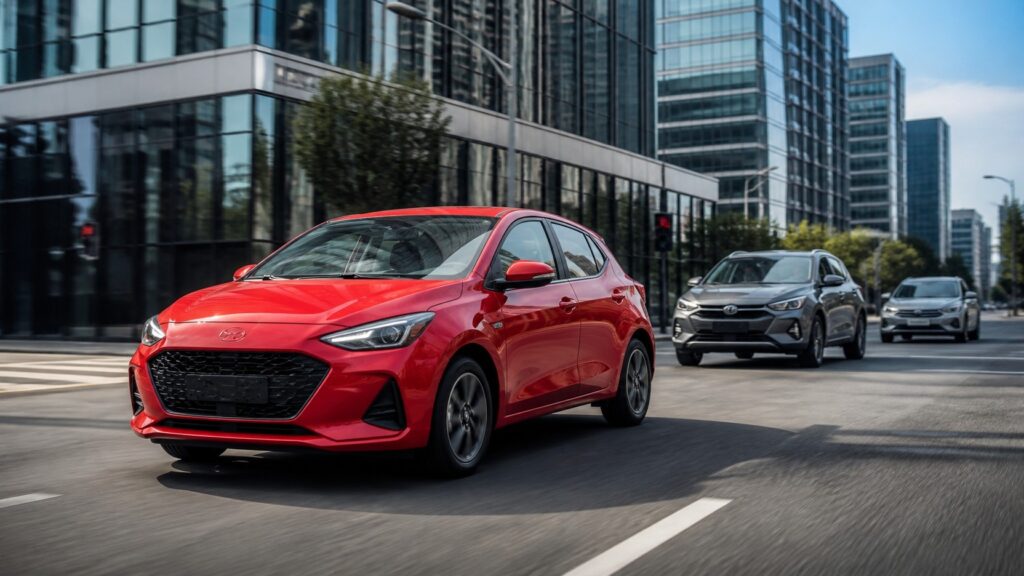
Mazda’s oldest passenger car turned into its brightest spot last month, with the Mazda3 nearly doubling its sales while several of the brand’s SUVs slid backward. It’s a strange plot twist for a compact that’s been on sale with only minor tweaks since the end of 2018.
- Mazda sold 3,903 Mazda3s in July, an 87.5 percent jump over the same month last year.
- Total Mazda sales still fell 13 percent for the month, dragged down by softer SUV demand.
- Small crossovers like the CX-30 held up, but bigger ones such as the CX-90 dropped sharply.
An Old Hatchback Finds New Fans
Introduced back in late 2018, the Mazda3 now counts as one of the longest-serving compacts a shopper can still order new. That age proved no deterrent last month. Across North America, 3,903 buyers picked one up in July, a result 87.5 percent above the same stretch a year earlier. Both body styles pitched in: the sedan surged 91.8 percent, and the hatchback added a solid 77.4 percent of its own.
Stretch the timeline out and the pattern holds. So far in 2026, Mazda3 volume is running 28 percent ahead of last year’s pace. This time it’s the hatchback carrying the load, climbing better than 71 percent, while the sedan turned in a more measured 10.3 percent bump. For a model left largely untouched for several years, that trajectory is tough to write off.
The Rest of the Month Was Rougher
That success stands out because Mazda’s overall July wasn’t much to cheer about. Total sales dropped 13 percent to 39,180 vehicles, and year to date deliveries slipped 5.6 percent to 241,014. Cars were the bright spot. Passenger car sales climbed more than 50 percent even as SUV sales fell 18 percent, a flip from the crossover-fueled growth Mazda leaned on for years.
The Mazda sales report does not discuss the Kia K4 LXS, so it provides no basis for a model comparison. Its figures are limited to Mazda’s July results, in which passenger-car sales rose by more than 50 percent while SUV sales fell 18 percent.
Small SUVs Win While Big Ones Struggle
Not every crossover had a bad month. The CX-30 gained almost 10 percent in July, and the CX-50 remains Mazda’s biggest year-to-date success story, climbing 26 percent to more than 76,500 deliveries. The smaller, more affordable models clearly held up better this time.
The larger models tell a different tale. The CX-5 fell 22.3 percent for the month, the CX-70 dropped 25.8 percent to just 1,187 units, making it Mazda’s worst seller, and the three-row CX-90 slumped nearly 30 percent to 4,831 units. The figures show an uneven month across Mazda’s crossover lineup.
The MX-5 Miata, which is even older than the Mazda3, held roughly steady. July sales dipped 16.3 percent, but that slide traces back to the retractable-hardtop RF version. The classic soft-top actually held firm, and the Miata’s year-to-date total is still slightly higher than last year.
What Comes Next for the Little Mazda
The timing of this comeback is interesting. Rumors point to a future Mazda3 replacement that could be the biggest change in the model’s history, possibly an electric version built on a Deepal platform from Mazda’s Chinese partner Changan. That’s the same approach behind the Mazda 6e sedan and CX-6e SUV sold in Europe and Australia.
Whether that idea ever reaches U.S. dealers is another question. EV demand has cooled here, and tariffs plus restrictions on Chinese-built vehicles have already complicated plans for some Chinese-built vehicles. For now, the reported July increase belongs to the current Mazda3, while any future replacement and its availability in the United States remain unconfirmed.
