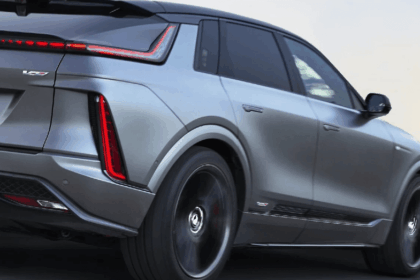
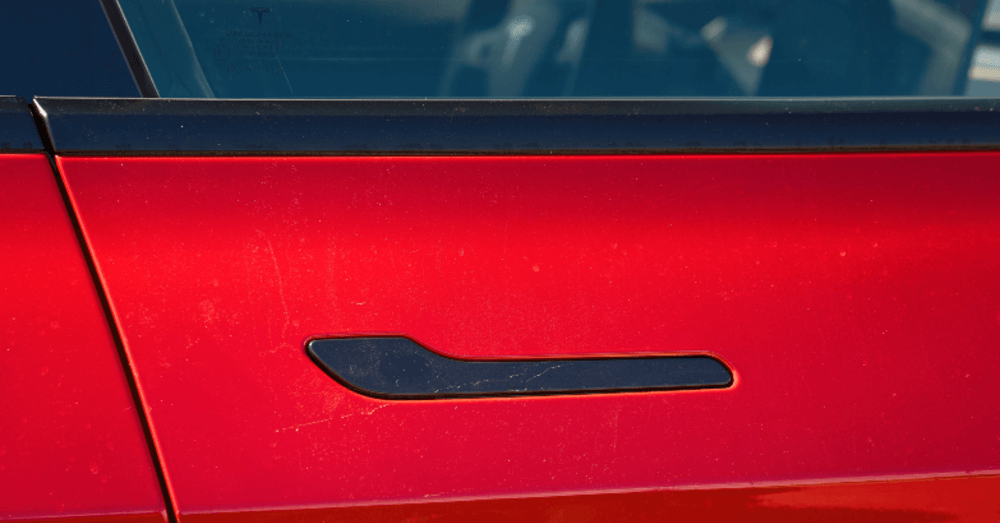
Nearly all EVs have flush door handles that require power to operate. This is causing serious EV door handle safety issues.
Automotive technology has been advancing at an extremely rapid pace, and maybe it should slow down. Sometimes it takes a few years to gather enough data to see that changes that were meant to be cool, interesting, and impressive might not be best for the industry. Some automakers have returned knobs and buttons to consoles. Could we see a time when the modern automotive door handle design also goes backward?
Electronic car door handles are causing serious safety concerns
Remember when Tesla ditched traditional door handles for those smooth, electronic ones that pop out at the touch of a button? Yeah, everyone thought it was pretty cool. Now the entire auto industry has copied that design for their EVs, and it’s becoming a serious safety problem. Complaints about electronic flush door handles jumped 65% last year, with people and pets getting trapped inside cars when the power cuts out. First responders can’t figure them out quickly during emergencies.
Owners are crawling through cargo areas to escape. What started as a sleek design feature to help with aerodynamics has turned into a mess that automakers across the board are scrambling to fix. The manual backup releases are often too hidden to be useful in a panic situation, and regulators in China and Europe are finally stepping in.
Some owners’ stories of EV door handle safety issues are alarming
Owners are complaining about the electronic flush door handles when they don’t function properly. In one complaint, the owner claimed the battery and doors failed, which trapped the driver, their elderly mother, and son inside the vehicle for two hours.
Another owner who has mobility issues claimed they had to crawl through the rear cargo door of their SUV, which in turn caused a trip to the emergency room because of the pain in their “bad leg.”
In a third story, the owner was stuck outside the parked EV with his brother, nephew, and two dogs. This group was three hours from their home, and it took a while for the car to be opened.
Is Tesla to blame for the EV door handle safety problems
When owners get trapped inside electric vehicles, they panic. That seems to be a normal and expected response. Although automakers have built manual releases for the Tesla-inspired door handles, most owners have trouble working these when trapped. It takes some power to allow these door handles to operate, which makes you wonder why owners would allow their vehicles to be low enough on electric power to not allow the door handles, or other features, to operate. This is the most recent of the Tesla safety complaints that impact the entire industry, but it seems like vehicle owners are at fault.
Should automakers change their door handle designs?
Electric vehicle safety issues span several different aspects of these vehicles, but the door handles shouldn’t be this big of a problem. Some solutions to this problem could be to provide more visible mechanical backup functions and ensure drivers are informed of these systems. Another solution might be to provide a small backup battery that is only used to operate essential systems, such as the door handles, in the event of a complete battery drain of the main batteries. Still, if an EV’s battery has drained to the point that the door handles cannot be used, that seems more like something that should be addressed by the car’s owner, not the automaker. Why did the owner allow the battery to become fully drained of power?
Are we too reliant on electronics?
Modern vehicles have several computers in them, and the EV door handle safety issues could be tied to failures of ECU systems to send signals to the door handles to release and open. In these cases, the owner cannot be blamed because the system is designed by the automaker. Older vehicles did not have computers and functioned mechanically. A mechanical connection that doesn’t rely on electronics to function might make some sense in these cases. Maybe it’s time to ditch the electronics for some vehicle functions. It’s unlikely automakers will do this, but something must be done to ensure occupants can easily and safely enter and exit their vehicles.
How will automakers respond to the safety troubles being caused by failing door handles? Who is really responsible for these problems?